Real Kids. Real Life. A Little More Sanity. Screen-free fun for the kids. Simple tools for Mom.
Screen-Free Activities for Kids While You Work (Because “Go Play” Lasts About Four Minutes)
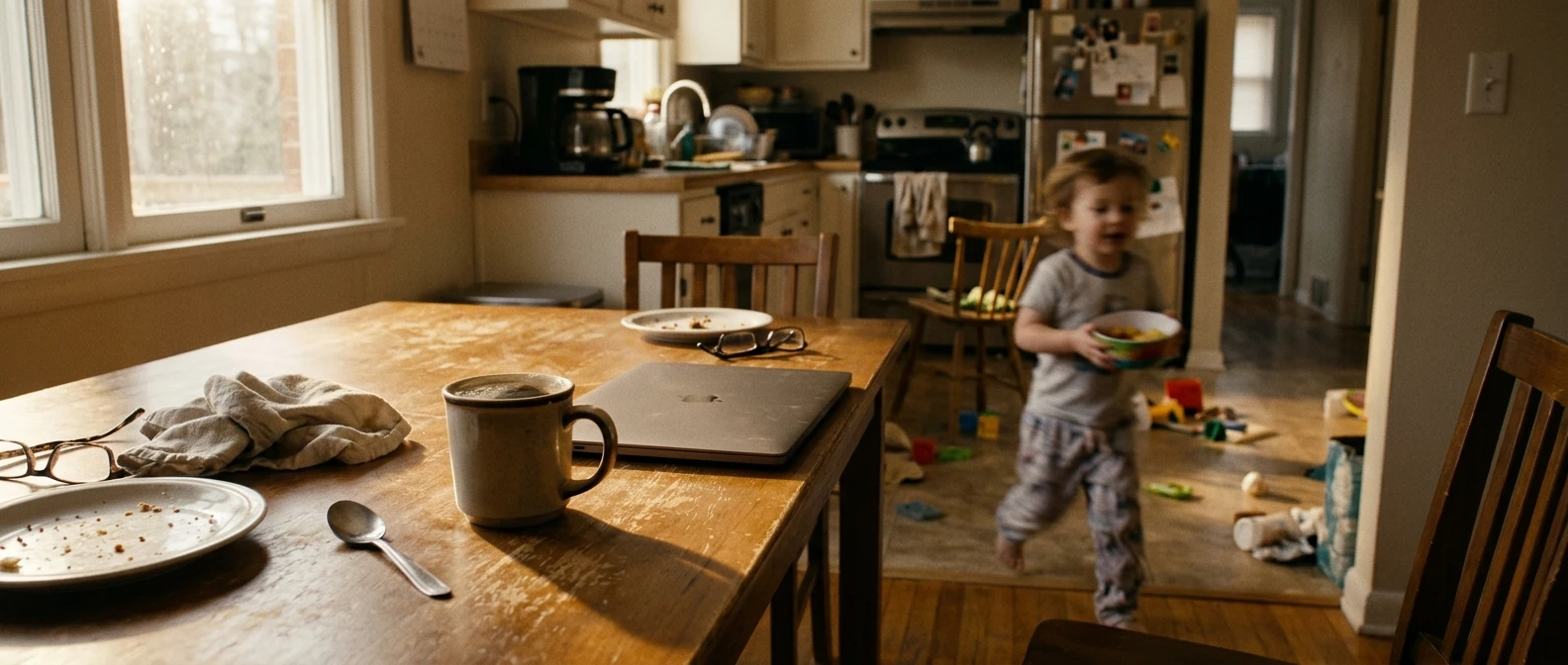
Your coffee is cold. Again.
You have one email to finish, a call in twenty minutes, and a small person asking for a snack.
The same small person who ate ten minutes ago. Apparently, that snack subscription has expired.
You need something for the kids to do while you get a little work done. Something that doesn’t involve a screen—or require you to become the full-time activities director.
The best screen-free activities for kids while you work are ones they can actually manage without you running the whole show.
Let’s make that easier with a few activity ideas, a little setup, and a routine you don’t have to reinvent every morning.
What Makes an Activity Worth Putting in the Play Basket?
An activity that needs your help every three minutes has just added another job to your list.
Before choosing something for work time, ask:
- Can my child get started? If you need to read twelve steps, cut out seventeen pieces, and locate the glue, save it for a time you can join in.
- Do they know what to do? “Build a garage for your cars” gives them a starting point. “Find something to do” tends to bring them right back to your chair.
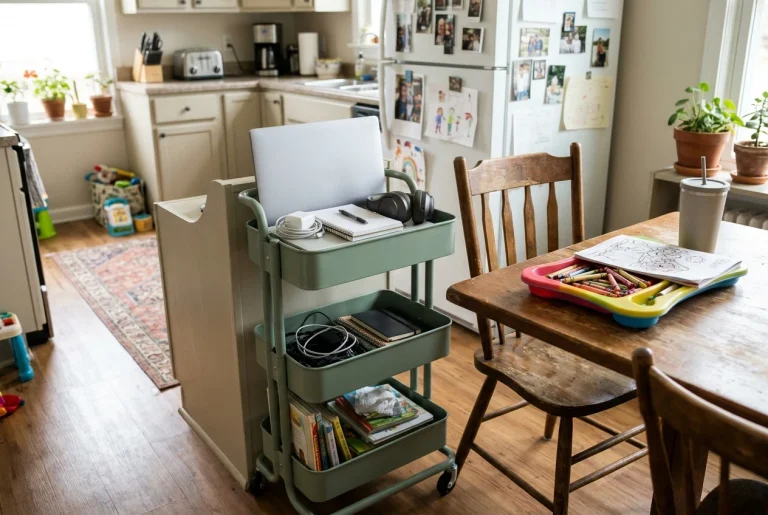
- Is everything together? Put the supplies in one basket, bin, or tray. Otherwise, you become the supply department.
- Can we manage the mess? Crayons on a table mat? Lovely. Glitter across three rooms? That’s a weekend decision.
- Can they come back to it? A puzzle, comic, or building project can keep going across several work blocks.
An activity can be wonderful and still need more help than you can give during a client call. Choose it for the time you actually have.
Five Minutes of Setup Can Save a Whole Lot of “Mom!”
Before opening your laptop, help everyone get settled.
Think bathroom, water, snack, supplies.
Yes, they may still ask for another snack. We’re preparing for work time, not performing miracles.
Here’s your quick check:
- Water is within reach, and basic needs are handled.
- The activity is ready, with packaging opened and supplies checked.
- Your child understands what to do.
- They know how long you’ll be working.
- They have a next step when they finish.
That last one is easy to forget.
Try a little “Finished? Pick One” list:
- Look at a book.
- Draw a picture for someone.
- Build something new.
- Choose another activity from your play basket.
For younger kids, use pictures instead of words.
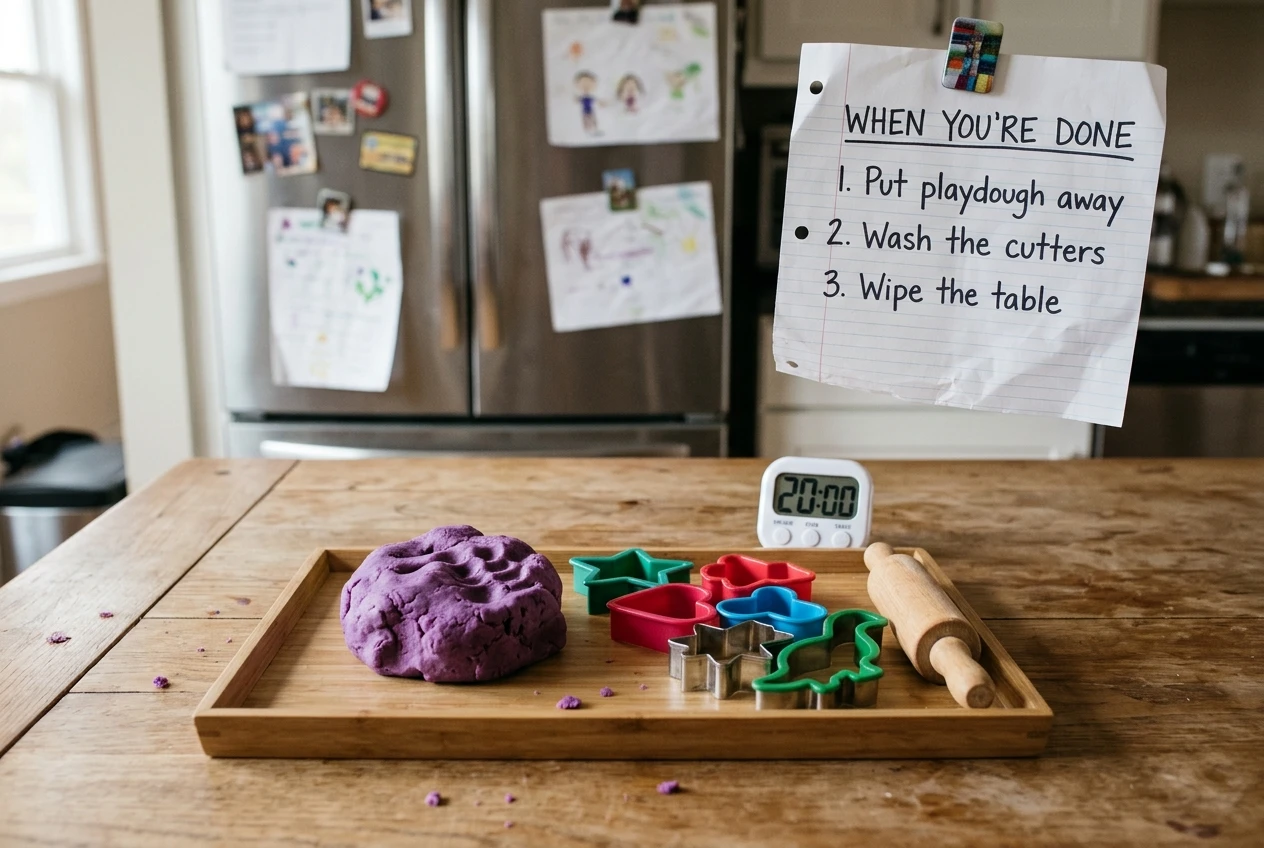
A visible timer can help too. “When the timer rings” gives them something clearer than “when Mommy’s done.”
Because, frankly, Mommy’s list could take us into next Tuesday.
Screen-Free Ideas by Age
Use these as starting points. Pick what your child can manage comfortably, and stay available for the supervision they need.
Ages 3–5: Simple Supplies, Small Stretches
Little ones need you nearby, and their work-time activities should be familiar and easy to use. Start with a few minutes and see how it goes.
Try:
- Playdough and chunky cutters: Add a rolling pin and let them make a pretend bakery.
- Sticker scenes: Give them large stickers and paper to create a farm, town, or wonderfully confusing zoo.
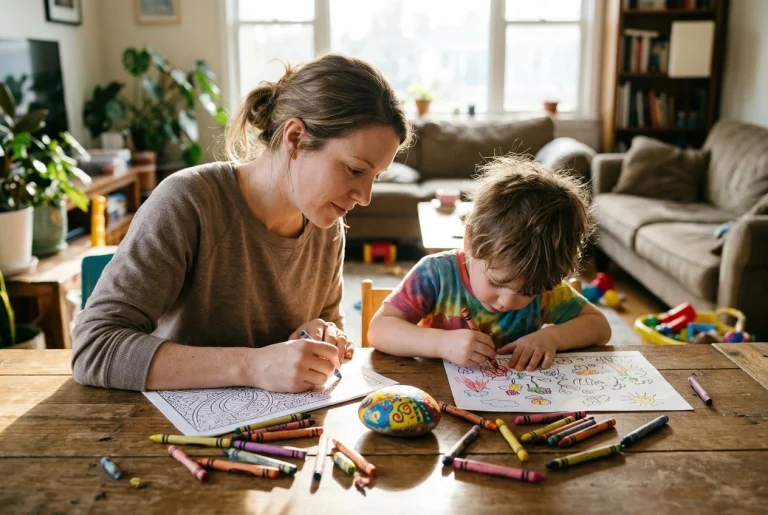
- Big-paper drawing: Tape paper to the table and bring out the chunky crayons.
- Build for a buddy: Ask them to make a house, bed, or garage for a favorite toy.
- Pretend play baskets: Gather familiar toy food, dolls, or large animal figures around one theme.
Choose supplies suited to your child, especially if things still end up in their mouth. Keep water play for a time when you can actively supervise.
The goal at this age might be finishing a paragraph. Count it.
Ages 6–8: Give Them a Mission
A little direction can help this age group get going.
Try:
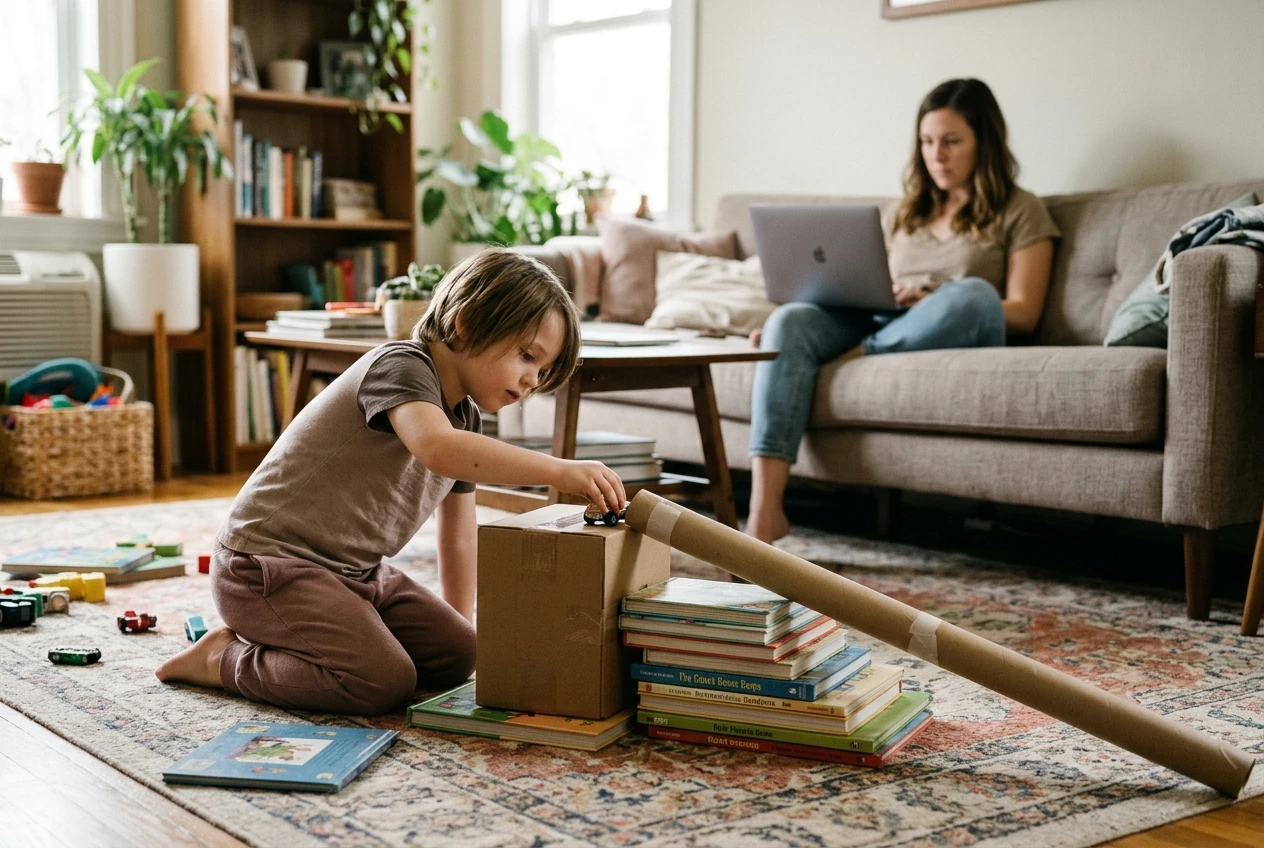
- Building challenges: Make a ramp for a car or a bridge that holds a toy.
- One-room scavenger hunts: Find something soft, something round, and three blue things.
- Drawing prompt jars: “Draw a dinosaur’s birthday party” is a solid afternoon assignment.
- Familiar craft kits: Choose something they’ve used before and can manage with the supplies provided.
- Listen and create: Put an audiobook on a speaker while they color or build.
Keep instructions short. You want them making things, not waiting for you to explain page two.
Ages 9–12: Let Them Own a Project
Older kids may enjoy having more say in what they make.
Try:
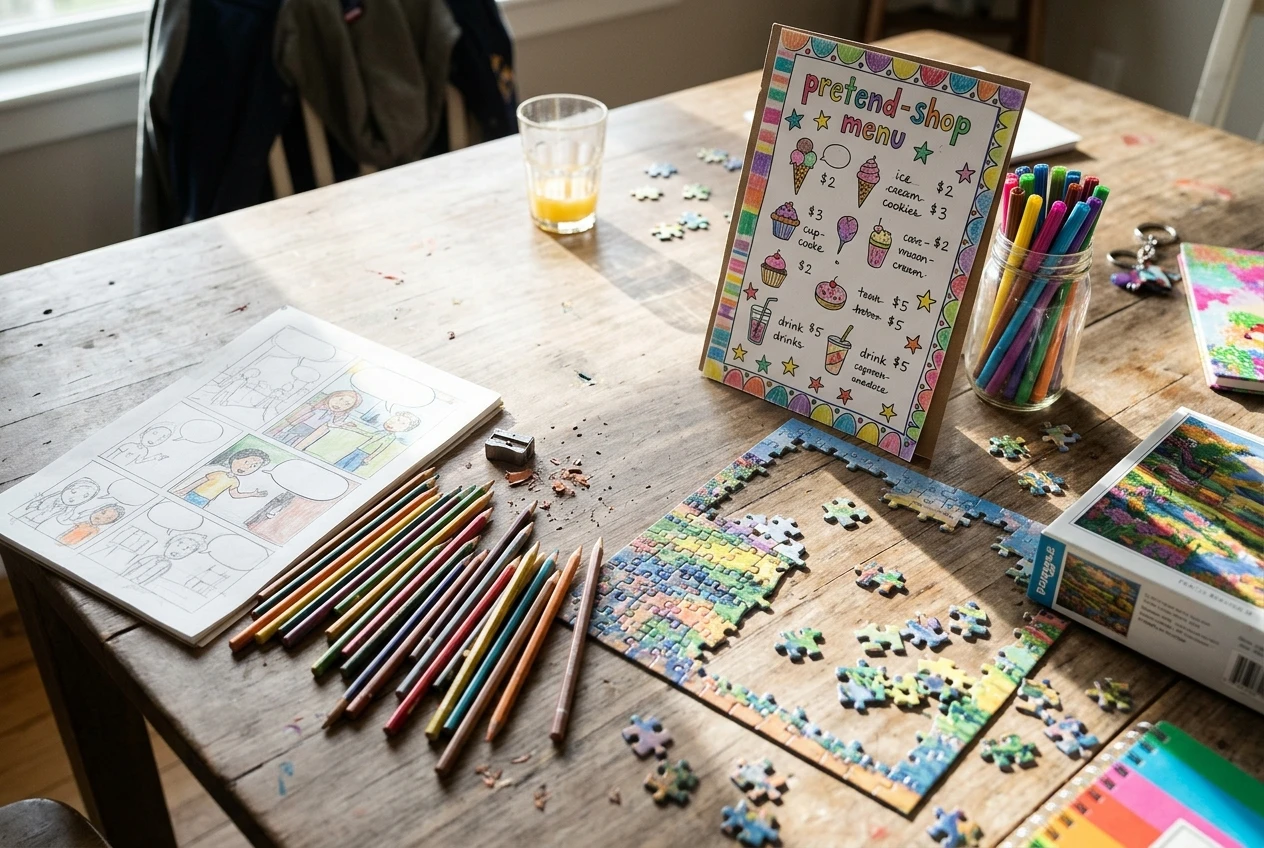
- Comic creators: Invent characters and make a comic, one page at a time.
- Puzzle stations: Leave a jigsaw on a board or tray so it can continue tomorrow.
- Pretend businesses: Create a shop name, menu, prices, and a sign. Prepare to discover that pretend cupcakes now cost $19.
- Skill projects: Practice braiding, drawing, simple knots, or card tricks using a library book.
- Reading challenges: Let them choose books and track their progress.
Ask for their ideas, too. Something they helped choose may hold their interest longer than something handed down by Mom’s Activity Committee.
Rotate the Baskets Before Everyone Gets Bored
You don’t need a brand-new activity every day.
Put a few familiar options together and rotate them. Tuck one away, bring another out, and save some favorites for work time.
For example:
- Monday: building basket
- Tuesday: drawing tray
- Wednesday: puzzles
- Thursday: pretend play or project basket
- Friday: choose a favorite
Use what you already have. This is supposed to help your day, not become another shopping assignment.
Build a Routine You Can Actually Repeat
Deciding everything from scratch each morning gets old fast.
A familiar pattern gives you fewer decisions and helps your kids know what’s coming.
Start with a short stretch your child can handle. That might be five minutes, ten minutes, or fifteen. Build gradually as it gets easier.
Try this:
- Connect first. Spend a few minutes together before you begin.
- Get the activity ready. Help them start if needed.
- Explain the plan. “I’m working until this timer rings. You can build or draw.”
- Keep the first work task small. Choose something that fits the time available.
- Check in afterward. Look at what they made and give them the attention you promised.
When the timer rings, avoid quietly adding “just one more thing” six times.
I know. The email was almost done. Then it had friends.
Keeping that promise helps make the routine something your child can count on.
And When They Interrupt Anyway?
They will.
Someone will need help. Someone will announce a dinosaur fact. Someone’s sibling will be breathing in an offensive manner.
Explain when they should come to you right away: if someone is hurt, they feel unsafe, or they need help with something they can’t safely handle.
For things that can wait briefly, practice a simple signal.
They might put a hand gently on your arm. You place your hand over theirs to acknowledge them, then listen when you reach a stopping point.

Or try:
“I hear you. Let me finish this sentence, and then I’ll listen.”
Keep the wait manageable—and follow through.
If interruptions are your biggest struggle, read From “Stop Bugging Me” to “I Hear You” for more ways to respond while protecting your work time.
Expect practice and reminders. One good explanation rarely settles anything permanently in a house with children.
You’re Allowed to Work Without a Side Order of Guilt
You can love your kids and need time to finish something.
You can enjoy being with them and appreciate a few minutes when nobody says your name.
During independent play, kids get opportunities to make choices, try ideas, and work through small challenges. You can stay nearby and available while giving them room to practice.
Your work deserves space in the day, too.
And when you get a break, you’re allowed to use some of it for yourself. Every spare minute does not need to report for laundry duty.
For ideas that fit into real life, read A Self-Care Routine That Actually Fits a Busy Mom’s Day.
Start With One Basket and One Small Work Block
This week, choose one familiar activity. Gather the supplies. Help your child get settled. Pick a small task for yourself and try a short work block.
Then notice what happens.
Did they need help getting started? Did the activity hold their interest? Was the timer too long? Were the crayons mysteriously missing before anyone began?
Adjust from there.
You’re learning what works in your house, with your kids, on an actual Tuesday.
Real Kids. Real Life. A Little More Sanity.
Screen-free fun for the kids. Simple tools for Mom. Because getting things done shouldn’t require a miracle—or coffee reheated for the fourth time. ☕💜
Your friend on the other end,
Wendy 💜